

New study: Promising results from the first Lexo study
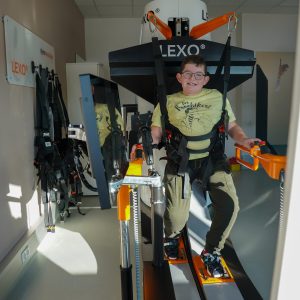
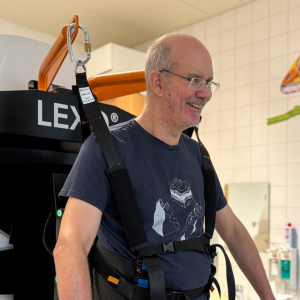
The very first study publication worldwide with our Lexo was conducted at the REHA ZENTRUM MÜNSTER, Austria. The study offers valuable insights into patients´ needs and identifies necessary adjustments to ensure that robot-assisted gait training is both enjoyable and effective for patients. The results create a better understanding of robot-assisted gait training with an end-effector device in general and with the Lexo in specific.
The mixed-methods feasibility study aimed to explore the feasibility, acceptability, goal attainment, and preliminary effects of robot-assisted gait training in patients with common and rare neurological diseases. Twenty-eight patients with stroke, multiple sclerosis, Parkinson´s disease, spinal cord injury, spinocerebellar ataxia, acute/chronic inflammatory demyelinating polyneuropathy, and motor neuron disease were included in the study. Patients received robot-assisted gait training on the Lexo for 45 minutes, 4x/week, for 4 weeks.
Highlights
- Lexo training was highly accepted by patients with various neurological diseases, feasible, and safe.
- Goal attainment was high as well as results showed overall and clinically meaningful changes in walking.
- Improvements in number of steps, walking speed, and functional mobility were observed.
Hotz I, Mildner S, Stampfer-Kountchev M, Slamik B, Blättner C, Türtscher E, Kübler F, Höfer C, Panzl J, Rücker M, Brenneis C, Seebacher B. Robot-assisted gait training in patients with various neurological diseases: A mixed methods feasibility study. PLoS One. 2024 Aug 27;19(8):e0307434.